How to Plan Your First Overlanding Trip in the Southeast
Most first overlanding trips fail in the living room, not on the trail. People buy recovery boards, argue about tire brands, and never pick a start date. If you want to know how to plan your first overlanding trip in the Southeast, start with a weekend-sized route, a real camp plan, and a fuel strategy that survives humidity, pop-up storms, and forest roads that take longer than Google Maps promises.
This guide is for stock or lightly modified 4WDs heading into Alabama, Georgia, Tennessee, and the southern Appalachians — not a six-week West Coast expedition fantasy.
How Do You Plan Your First Overlanding Trip in the Southeast?
Keep the plan small. One weekend. One documented route. Camps chosen before you leave. Fuel and water with margin. Offline maps downloaded. Everything else is optional.
The rest of this post walks that checklist in order so you are not improvising at a gated forest road on Saturday morning.
Why the Southeast Is a Smart First Overlanding Region
You do not need Utah slickrock for a real trip. The Southeast packs forest service roads, river bottoms, ridge camps, and small-town resupply into short drives.
What that means for planning:
- Distance is friendly. You can leave Atlanta, Birmingham, Nashville, or Charlotte Friday after work and be on dirt before dark.
- Resupply exists. Gas, ice, and a grocery stop are usually under an hour from camp if you plan the loop right.
- Weather is the real boss. Summer heat, humidity, and afternoon storms matter more than whether your fridge has Bluetooth.
Plan for the region you are actually driving. A Colorado packing list and a Talladega National Forest weekend are different problems.
Step 1: Pick a Weekend-Sized Objective
Your first trip should answer one question: can you drive a known route, camp overnight, and get home without drama?
Good first-trip targets in the Southeast:
- 1–2 nights
- Under ~300 miles of trail/dirt for a first weekend (less is fine)
- At least one bailout paved road you can hit if weather or a mechanical issue ends the day early
- A route someone has already documented with camps and GPX — not a vague “we’ll figure it out” pin drop
Two published Trail Forge routes that fit a Southeast first-trip mindset:
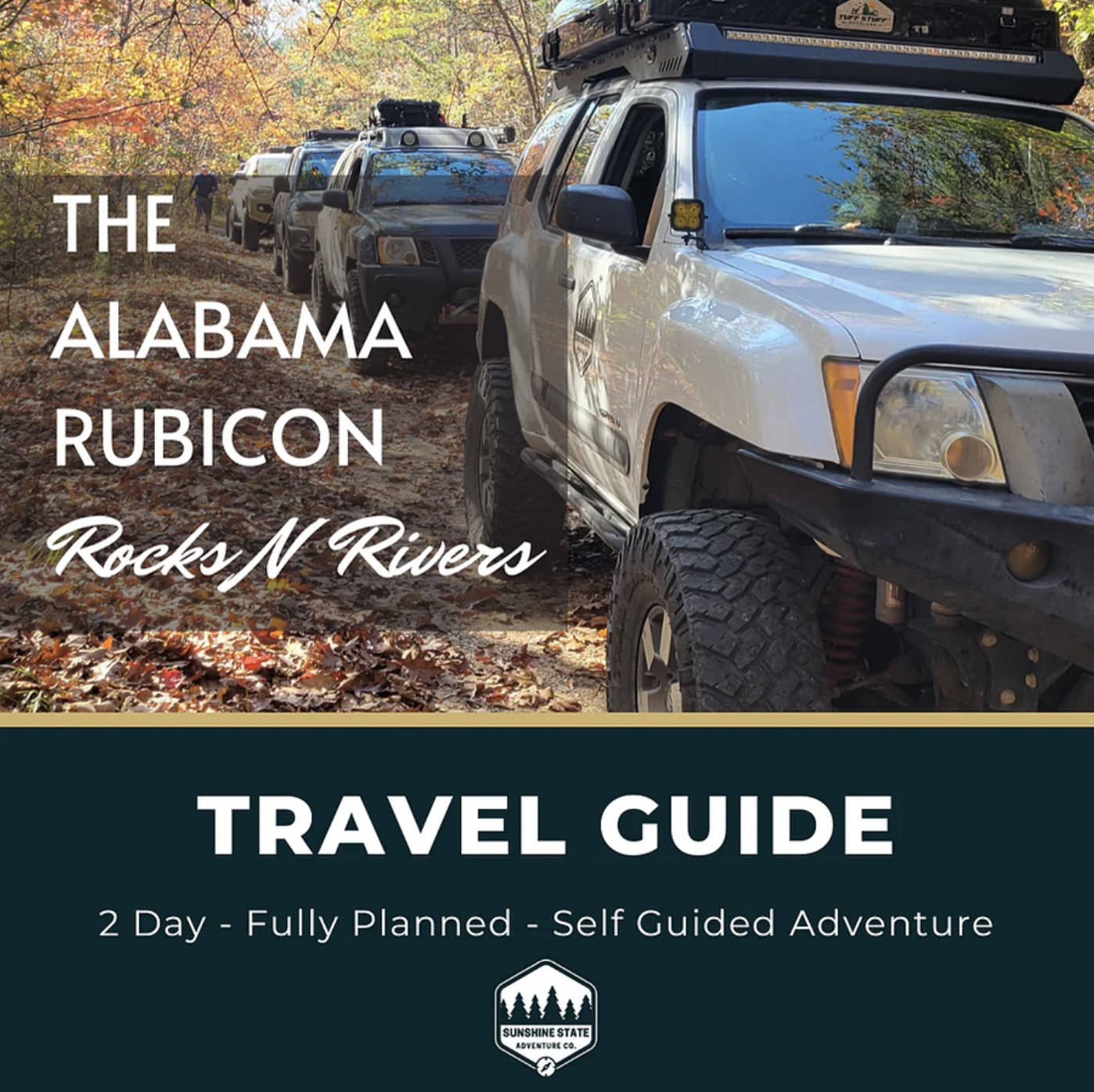
- Alabama Rubicon — about 300 miles around Talladega, Alabama. Big enough to feel like a real expedition, modular enough to run a section if a full loop is too much for your first weekend.
- Reverse Traverse — about 255 miles in Georgia, built as a travel guide with camp planning baked in. Useful when you want a clear west-to-east structure instead of improvising every turn.
Browse more guides on the Trail Forge marketplace and pick one you can finish without inventing navigation on the fly.
How hard should the first trip be?
Easier than your ego wants. Save the winch-porn ledges for trip four. First trip goals:
- Practice airing down and airing up
- Find camp before dark
- Cook one real meal
- Drive home with the vehicle and friendships intact
If the route difficulty is a 4 or 5 out of 5 and you have never aired down a tire, pick a milder section or a different guide.
Step 2: Build the Trip Around Camps, Not Miles
Beginners plan miles. Experienced drivers plan where they will sleep.
For a Southeast overlanding weekend:
- Choose Friday night camp within a realistic arrival window (assume dirt averages 15–25 mph, not highway speed).
- Choose Saturday night camp with a water or town option nearby if you are still learning your consumption rates.
- Leave Sunday with padding for airing up, a slow section, and traffic home.
Dispersed camping on national forest roads is common in the Southeast, but rules vary by forest. Check Motor Vehicle Use Maps (MVUMs), seasonal closures, and whether the site you want is legal for overnight parking. Do not assume every pullout is fair game.
Camp checklist before you leave home
- Backup camp within 10–20 miles of your primary pin
- Quiet hours / fire restrictions for that county or forest
- Weather forecast for ridge and hollow, not just the nearest city
- One “abort to hotel / developed campground” option if storms or mud shut you down
Step 3: Plan Fuel Like the Station Might Be Closed
Southeast overlanding distances look short on a map and long on the odometer when you are in 4-Lo crawling through mud or climbing ridge roads.
Practical fuel rules for a first trip:
- Start every trail day above half a tank
- Know the longest gap between reliable stations on your route
- Carry a approved fuel can if that gap is uncomfortably close to your range with a safety margin
- Budget for worse MPG than your highway commute — heat, idle time, and low-range chewing through fuel add up
Ice and water restocks matter too. In July and August, a cooler that was fine in March becomes a melt puddle by Saturday afternoon. Plan a mid-trip ice stop or bring a second cooler strategy.
Step 4: Water, Heat, and Storm Timing
If you ignore one Southeast planning detail, make it not this one.
How much water should you plan?
For people and cooking on a humid weekend:
- Rough baseline: 1 gallon per person per day as a floor, more if you are hiking off the vehicle or cooking elaborate meals
- Keep a dedicated vehicle radiator / windshield water separate from drinking water
- Cache a known fill location (campground spigot, town store) in your itinerary notes
Electrolytes are not optional theater in Alabama and Georgia summers. Plan them the same way you plan coffee.
When should you drive?
Morning miles, afternoon flexibility. Southeast thunderstorms love mid-afternoon. Build your itinerary so the hardest or most exposed sections happen earlier, and treat 2–5 p.m. as “maybe we sit this out under a tarp” time, not “force the next ridge no matter what.”
Step 5: Download Navigation Before You Lose Signal
Cell service drops in hollows and on forest roads. Planning how to plan your first overlanding trip in the Southeast includes admitting your phone will become a brick in the wrong cove.
Before you leave pavement:
- Download the route GPX to your phone and a second device if you have one
- Download offline maps for the whole loop plus bailout highways
- Carry a paper atlas or printed overview for the big picture when the screen gets confusing
- Note key junctions with plain-language descriptions (“left after the concrete bridge”), not only lat/long
Guides with downloadable GPX — like the Alabama Rubicon and Reverse Traverse listings above — exist so you are not inventing a track from a fuzzy Instagram story.
Step 6: Make a Boring Vehicle and Gear Plan
You do not need a $4,000 drawer system for trip one. You do need a vehicle that can finish the weekend.
Pre-trip vehicle checks:
- Tires (including spare) at known pressures; pack a 12V compressor and gauge
- Fluids topped; look under the truck for fresh leaks
- Battery healthy enough for fridge/compressor cycling if you run them
- Recovery basics: shovel, traction boards, rated strap, gloves
- Tools you know how to use: sockets, pliers, zip ties, tape, flashlight
Gear that actually affects the plan:
- Shelter rated for rain, not just “clear skies vibes”
- Sleeping setup that keeps you off wet ground
- Stove fuel for every meal you scheduled (plus one)
- Headlamp for each person
- First aid + blister care
- Trash bags — pack it out every time
If you want a broader “what overlanding even is” primer before the planning checklist, read Getting Started With Overlanding. This post assumes you already decided to go and need the plan.
Step 7: Write the One-Page Trip Sheet
The night before, shrink the whole plan to one page (phone note is fine):
- Start time and meeting point
- Friday / Saturday camp coordinates and backup
- Fuel and ice stops in order
- Hard turnaround time Sunday
- Emergency contacts and nearest town hospital reference
- Who has recovery gear in which vehicle
If you are going with a second vehicle — strongly recommended for a first Southeast trip — share that sheet. Two trucks fix more problems than one hero build.
A Sample Southeast Weekend Planning Skeleton
Use this as a template, then swap in your actual guide:
Friday
- Leave after work with tanks full and coolers iced
- Hit dirt with enough daylight to reach camp without rushing
- Simple dinner; early sleep
Saturday
- Drive the meat of the route in the morning
- Midday ice/fuel if the plan calls for it
- Be in camp or on an easy segment before peak storm hours
- Real dinner; review Sunday bailout
Sunday
- Short scenic section or exit route
- Air up before highway speeds
- Home with margin — tired driving on I-20 after a muddy weekend is how trips end badly in the parking lot of a gas station
That skeleton works whether you are sampling a section of the Alabama Rubicon, following the Reverse Traverse structure through Georgia, or running a shorter forest-road loop you already know.
Common First-Trip Planning Mistakes
- Too many miles. Cut the route in half and enjoy it.
- No backup camp. Your “perfect” pullout will be occupied or flooded.
- Trusting city weather apps alone. Check radar the morning of and watch the sky.
- Skipping MVUMs and seasonal closures. A gated forest road ruins a Saturday fast.
- Building the truck instead of the itinerary. The trail teaches upgrades better than forums do.
The Bottom Line
Learning how to plan your first overlanding trip in the Southeast is mostly about restraint: a weekend objective, camps locked before you leave, fuel and water with margin, offline navigation, and weather that gets a veto vote.
Pick a documented route, write the one-page sheet, and go. The dirt roads around Talladega and north Georgia will teach you more in two nights than another month of gear research.
Looking for overlanding routes with detailed trail guides, camp locations, and downloadable GPX files? Check out Trail Forge Adventures and find your next trip.